
Discover the Wonderful Weirdness of the Aurora Borealis in Jukkasjärvi and Kiruna
The Mesmerizing Dance of the Northern Lights
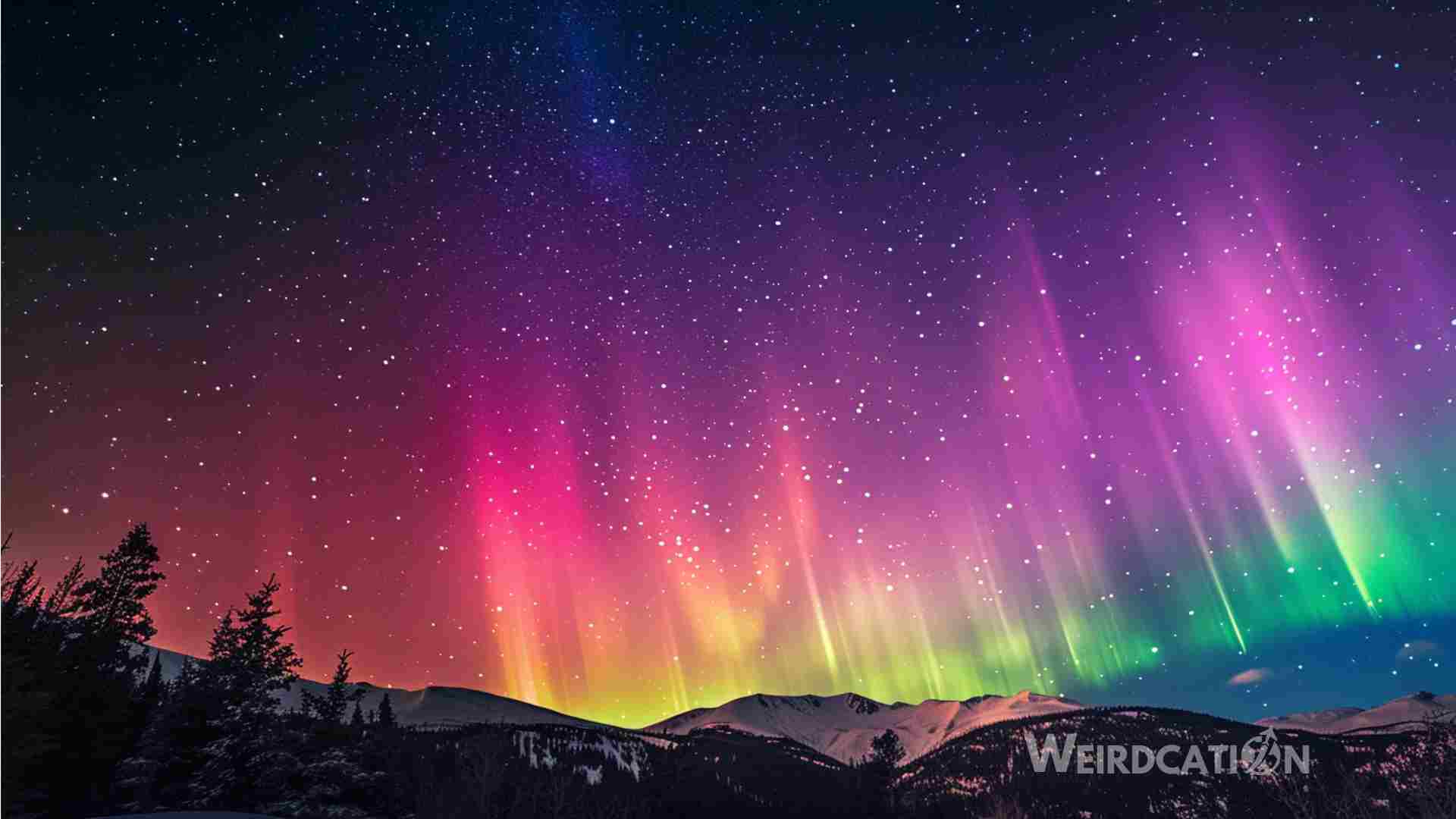
In the far reaches of the northern hemisphere, where the long winter nights are illuminated by the shimmering glow of the aurora borealis, lies a spectacle that has captivated humankind for centuries. The northern lights, also known as the aurora borealis, are a celestial display of otherworldly beauty, painting the night sky with ethereal curtains of light that dance and swirl in mesmerizing patterns of green, purple, and pink. For those lucky enough to witness this natural wonder firsthand, it is an unforgettable experience that will forever be etched in their memories.

What are the northern lights and how do they occur?
The northern lights are a natural phenomenon caused by the interaction of charged particles from the sun with Earth’s magnetic field. These particles, known as the solar wind, are ejected from the sun’s surface during solar flares and coronal mass ejections. As they reach Earth’s upper atmosphere, they collide with oxygen and nitrogen atoms, causing them to emit light in various colors depending on their altitude and the type of atom involved.
The most common color of the northern lights is a pale yellowish-green, caused by the excitation of oxygen atoms at lower altitudes. At higher altitudes, rarer red hues can appear, while the excitation of nitrogen atoms produces blue and purple colors. These colors mix and mingle in the night sky, creating the mesmerizing display of the aurora borealis.
The best time to see the aurora borealis in Sweden
While the northern lights can potentially be seen year-round in Sweden, the best time to witness this natural wonder is during the long, dark winter months. From September to March, the nights are longer and darker, providing the ideal conditions for aurora viewing. The peak season for northern lights activity is typically from late September to early April, with the highest chances of sightings occurring during the coldest months of December to February.
The northern lights are a natural phenomenon and their appearance is never guaranteed. Factors such as solar activity, weather conditions, and cloud cover can all impact the visibility of the aurora borealis. To maximize your chances of seeing the northern lights in Sweden, it’s recommended to plan your trip during the peak season, stay for at least a few nights, and be prepared to venture out into the cold, dark wilderness away from city lights.
The magical experience of witnessing the ghostly green and purple lights in the night sky
Witnessing the northern lights firsthand is an experience that defies description. It is a moment of pure magic, where the vast expanse of the night sky comes alive with an ethereal display of light and color. As the ghostly green and purple curtains of the aurora borealis dance and swirl overhead, time seems to stand still, and the world falls away, leaving only the awe-inspiring beauty of the cosmos.
For many, seeing the northern lights is a bucket list item, a once-in-a-lifetime experience that will be cherished forever. It is a moment of connection with the natural world, a reminder of the incredible wonders that exist beyond our everyday lives. Whether you’re standing in the silent, snow-covered forests of Jukkasjärvi or gazing up at the stars from the remote wilderness of Kiruna, the northern lights have the power to transform and inspire, leaving an indelible mark on the soul.

The Science Behind the Aurora Borealis
To truly appreciate the awe-inspiring beauty of the northern lights, it’s helpful to understand the scientific phenomena that create this mesmerizing display. The aurora borealis is a complex interplay of solar wind, Earth’s magnetic field, and charged particles, all coming together in a cosmic dance that lights up the night sky. Let’s dive deeper into the science behind the northern lights.
Understanding the solar wind and Earth’s magnetic field
The story of the northern lights begins with the sun, a massive ball of hot plasma that constantly emits a stream of charged particles known as the solar wind. This wind, composed primarily of electrons and protons, flows outward from the sun at speeds of up to 1 million miles per hour, carrying with it the sun’s magnetic field.
As the solar wind approaches Earth, it encounters our planet’s magnetic field, a protective bubble known as the magnetosphere that surrounds the Earth. This magnetic field is generated by the Earth’s molten iron core and acts as a shield, deflecting the majority of the solar wind particles away from the planet.
However, during particularly strong solar flares or coronal mass ejections, the sun can release a burst of highly energetic particles that can temporarily overwhelm Earth’s magnetic defenses. When this happens, the charged particles of the solar wind are able to penetrate deeper into the magnetosphere, where they interact with Earth’s upper atmosphere to create the northern lights.
The role of charged particles in creating the northern lights
Once the charged particles of the solar wind enter Earth’s upper atmosphere, they begin to collide with the atoms and molecules of oxygen and nitrogen that are present there. These collisions excite the atmospheric particles, causing them to gain energy and become unstable.
To regain stability, the excited particles must release the excess energy they’ve acquired. They do this by emitting light, in a process known as atomic emission. The specific color of light emitted depends on the type of particle involved and the amount of energy it has absorbed.
Oxygen atoms, for example, emit primarily greenish-yellow light when excited at lower altitudes (around 60-150 miles above Earth’s surface), and red light at higher altitudes (above 150 miles). Nitrogen atoms, on the other hand, emit blue and purple hues when excited.
The different colors and shapes of the aurora borealis
The interplay of these different colors and the varying altitudes at which they occur creates the stunning multicolored displays of the aurora borealis. The ghostly green and yellow curtains that are most commonly associated with the northern lights are caused by the excitation of oxygen atoms at lower altitudes, while the rarer red hues are created by oxygen at higher altitudes.
The blue and purple colors, caused by the excitation of nitrogen atoms, are less commonly seen but can add a weird beauty to the aurora display when they do appear.
In addition to the colors, the northern lights can take on a variety of shapes and forms as they dance across the night sky. The most common form is a diffuse glow or arc that stretches across the horizon, but the aurora can also appear as ribbons, curtains, or spirals, depending on the conditions in the magnetosphere and upper atmosphere.
One of the most spectacular forms of the aurora borealis is the corona, which occurs when the lights appear directly overhead and seem to converge on a central point, creating a crown-like shape that fills the sky. This type of display is relatively rare but is an unforgettable sight for those lucky enough to witness it.
Understanding the science behind the northern lights can deepen our appreciation for this incredible natural phenomenon. It’s a reminder of the complex and beautiful interactions that are constantly occurring between our planet and the cosmos beyond. As we stand beneath the shimmering curtains of the aurora borealis, we are witnessing a cosmic dance that has been going on for billions of years, a testament to the enduring wonder and mystery of the universe we call home.

Jukkasjärvi: A Frosty Wonderland for Aurora Chasers
Nestled in the heart of Swedish Lapland, the small village of Jukkasjärvi has become a mecca for aurora chasers and winter enthusiasts from around the world. Located 200 kilometers north of the Arctic Circle, Jukkasjärvi is a frosty wonderland of snow-covered forests, frozen rivers, and endless expanses of pristine wilderness. It’s a place where the long, dark winter nights are illuminated by the ethereal glow of the northern lights, and where the magic of the Arctic comes alive in all its breathtaking beauty.
Jukkasjärvi
Jukkasjärvi is situated along the banks of the Torne River, one of the last untouched rivers in Europe. The village has a population of just over 500 people, most of whom are involved in tourism or traditional reindeer herding. Despite its small size, Jukkasjärvi has become a major destination for travelers seeking a unique and unforgettable winter experience.
One of the main draws of Jukkasjärvi is its proximity to the Arctic Circle and its location within the “aurora zone,” a band around the Earth’s magnetic poles where the northern lights are most frequently seen. The village’s remote location, far from the light pollution of cities and towns, makes it an ideal spot for aurora viewing, with clear, dark skies that offer unobstructed views of the celestial display.
The world-famous ICEHOTEL and its unique aurora experience
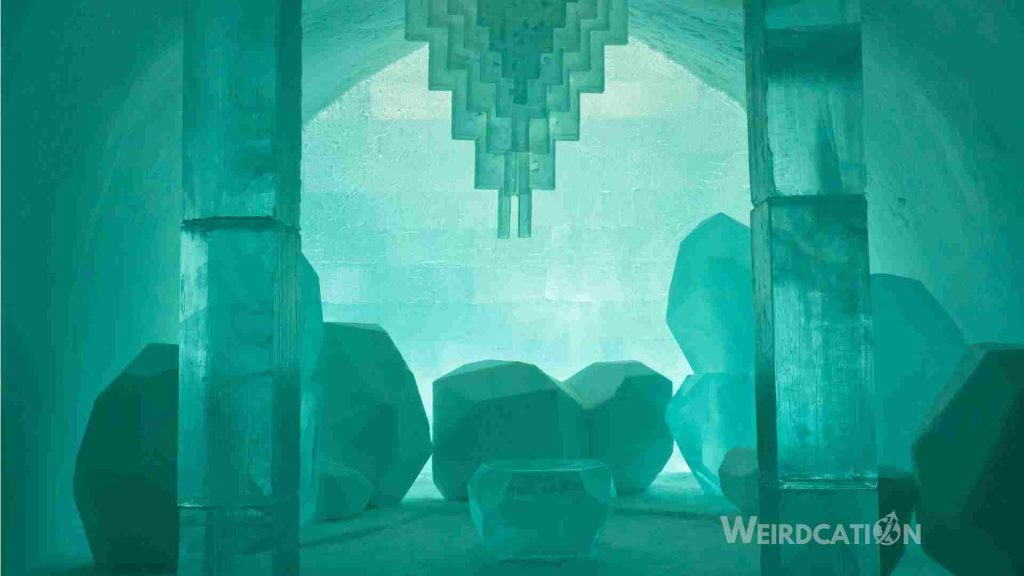
Jukkasjärvi is perhaps best known as the home of the ICEHOTEL, a one-of-a-kind accommodation that is rebuilt every winter using ice and snow from the Torne River. The ICEHOTEL features a collection of artist-designed suites, each with its own unique theme and sculptures carved from ice. Guests can spend the night in these frosty chambers, sleeping on beds made of ice and reindeer skins while the northern lights dance overhead.
In addition to its ice rooms, the ICEHOTEL also offers a range of activities and experiences designed to immerse guests in the beauty and wonder of the Arctic winter. One of the most popular of these is the northern lights tour, which takes guests on a guided excursion into the wilderness to search for the aurora borealis. Led by experienced guides, these tours offer the chance to learn about the science and mythology of the northern lights while taking in the stunning beauty of the Arctic landscape.
Outdoor activities and excursions to maximize your chances of seeing the northern lights
While the ICEHOTEL is certainly a highlight of any visit to Jukkasjärvi, the village offers a wide range of other activities and excursions that are designed to maximize your chances of seeing the northern lights. One of the most popular of these is dog sledding, which allows you to explore the snowy wilderness while being pulled by a team of energetic huskies. As you glide through the silent, snow-covered forests, you’ll have the opportunity to take in the beauty of the Arctic landscape and keep an eye out for the northern lights overhead.
Another popular activity in Jukkasjärvi is snowmobiling, which offers a thrilling way to explore the vast expanse of the Arctic wilderness. Guided snowmobile tours take you deep into the heart of the aurora zone, where you’ll have the chance to witness the northern lights away from the light pollution of the village. You’ll also have the opportunity to learn about the fascinating history and culture of the Sami people, the indigenous inhabitants of the region.
For a more relaxed and intimate northern lights experience, Jukkasjärvi also offers a range of aurora camps and cabins that are located away from the village in prime aurora viewing locations. These camps typically include comfortable accommodations, meals, and guided activities, as well as the opportunity to spend the night watching the northern lights from the warmth and comfort of a cozy cabin or tent.
Kiruna: The Gateway to the Aurora Zone
Located just 100 kilometers north of Jukkasjärvi, the city of Kiruna is another prime destination for those seeking to witness the northern lights in Swedish Lapland. As the northernmost city in Sweden, Kiruna is situated deep within the aurora zone, offering some of the best chances of seeing the northern lights in the country. With its stunning natural beauty, rich cultural heritage, and state-of-the-art facilities for aurora viewing, Kiruna has become a hub for aurora chasers and winter enthusiasts from around the world.
aurora hunting in Kiruna
Kiruna is a city of contrasts, where the old meets the new in a fascinating blend of traditional Sami culture and modern innovation. The city is home to a thriving mining industry, with the world’s largest underground iron ore mine located just outside the city limits. At the same time, Kiruna is surrounded by vast expanses of pristine wilderness, with snow-covered forests, majestic mountains, and frozen lakes that offer endless opportunities for outdoor adventure.
For aurora chasers, Kiruna’s location within the aurora zone is what makes it such a significant destination. The city’s high latitude and clear, dark skies offer some of the best chances of seeing the northern lights in Europe, with the aurora borealis visible on an average of every other clear night during the winter months. This, combined with the city’s excellent infrastructure and range of accommodations and activities, has made Kiruna a popular base for those seeking to witness the magic of the northern lights.
The Aurora Sky Station and its state-of-the-art facilities
One of the highlights of any visit to Kiruna is the Aurora Sky Station, a world-class facility dedicated to the observation and study of the northern lights. Located on the top of Mount Nuolja, the Aurora Sky Station offers a unique and unforgettable aurora viewing experience that is unmatched anywhere else in the world.
To reach the station, visitors take a chairlift or cable car up the mountain, ascending through the snowy wilderness to an altitude of 900 meters above sea level. From this vantage point, the views of the surrounding landscape are simply breathtaking, with the city of Kiruna and the vast expanse of the Arctic wilderness stretching out before you.
Once at the station, visitors have access to a range of state-of-the-art facilities designed to maximize their chances of seeing the northern lights. These include a large observation deck with panoramic windows, a cozy lounge area with a fireplace and comfortable seating, and a gourmet restaurant serving traditional Swedish cuisine. The station also offers a range of guided tours and activities, including aurora photography workshops and lectures on the science and mythology of the northern lights.
Guided tours and photography workshops for capturing the perfect aurora shot
In addition to the Aurora Sky Station, Kiruna offers a range of other guided tours and activities designed to help visitors capture the perfect shot of the northern lights. These include aurora hunting tours that take you into the wilderness in search of the best viewing spots, as well as photography workshops that teach you the skills and techniques needed to capture stunning images of the aurora borealis.
One of the most popular of these tours is the aurora photography tour, which takes you to a remote location outside the city where you’ll have the chance to photograph the northern lights under the guidance of an experienced instructor. You’ll learn about the best camera settings and techniques for capturing the aurora, as well as how to compose your shots to create truly stunning images.
Other tours and activities in Kiruna include snowmobile safaris, dog sledding adventures, and visits to local Sami villages where you can learn about the traditional culture and way of life of the indigenous people of the region. No matter which activities you choose, Kiruna offers a truly unforgettable winter experience that is centered around the beauty and wonder of the northern lights.
Preparing for Your Northern Lights Adventure
Witnessing the northern lights in person is a dream come true for many travelers, but it’s important to be well-prepared for the unique challenges and conditions of the Arctic winter. From choosing the right time to visit to packing the essential gear and clothing, there are a few key things to keep in mind as you plan your northern lights adventure in Sweden.
Best time to visit Sweden for aurora viewing
The northern lights are visible in Swedish Lapland from September to March, but the best time to see them is typically from late September to early April. During this time, the nights are longer and darker, providing the ideal conditions for aurora viewing. However, it’s important to keep in mind that the northern lights are a natural phenomenon and their visibility can never be guaranteed, even during the peak season.
If you’re planning your trip around the northern lights, it’s a good idea to give yourself at least a few nights in the aurora zone to increase your chances of seeing them. Some of the best times to visit are around the equinoxes in September and March, when the earth’s tilt is at its most extreme and the likelihood of solar activity is highest.
Essential clothing and gear to stay warm in the Arctic cold
One of the biggest challenges of aurora chasing in Sweden is staying warm in the face of the Arctic cold. With temperatures that can drop well below freezing, it’s essential to have the right clothing and gear to keep you comfortable and safe during your northern lights adventure.
Some of the key items to pack include:
- A warm, waterproof jacket and pants
- Insulated boots with good traction for walking on snow and ice
- Warm, wool or synthetic base layers and mid-layers
- A hat, scarf, and gloves or mittens
- Hand and foot warmers
- A headlamp or flashlight for navigating in the dark
In addition to clothing, it’s also a good idea to bring a thermos for hot drinks, a camera and tripod for capturing the northern lights, and any necessary medications or toiletries.
Accommodation options in Jukkasjärvi and Kiruna
When it comes to accommodation, Jukkasjärvi and Kiruna offer a range of options to suit every budget and preference. In Jukkasjärvi, the ICEHOTEL is the most famous and unique option, offering the chance to sleep in a room made entirely of ice and snow. However, the hotel also offers warm accommodations in its adjacent chalets and cabins.
Other options in Jukkasjärvi include the Aurora Camp, which offers comfortable tent accommodations in a prime aurora viewing location, and the Jukkasjärvi Northern Lights Cabins, which provide a cozy and intimate setting for aurora watching.
In Kiruna, the Scandic Ferrum is a popular choice for its central location and modern amenities, while the Camp Ripan offers a range of accommodation options including cabins, apartments, and hotel rooms. For a more unique experience, the Máttaráhkká Northern Light Lodge offers glass-roofed cabins with stunning views of the surrounding wilderness and the northern lights.
Booking tips and recommended tour operators
When booking your northern lights adventure in Sweden, it’s important to plan ahead and book early, especially if you’re traveling during the peak season. Many of the top accommodations and tours can fill up months in advance, so it’s a good idea to make your reservations as soon as possible.
Some recommended tour operators for northern lights experiences in Sweden include:
- Lights Over Lapland: Offers a range of aurora chasing tours and photography workshops in Abisko and Jukkasjärvi.
- Kiruna Guidetur: Provides guided tours and activities in the Kiruna area, including aurora hunting and snowmobile safaris.
- Nordic Visitor: Offers customized northern lights itineraries and packages throughout Swedish Lapland.
When booking your tours and activities, be sure to read reviews and do your research to ensure that you’re getting a high-quality experience from a reputable operator.
The Aurora Hunting Experience: What to Expect
The northern lights are a natural phenomenon that can be unpredictable and elusive, even in the best of conditions. As an aurora chaser in Swedish Lapland, it’s important to have realistic expectations and to be prepared for the unique challenges and rewards of the experience.
The importance of patience and persistence in aurora chasing
One of the most important things to keep in mind when chasing the northern lights is that patience and persistence are key. The aurora borealis is a natural phenomenon that is affected by a wide range of factors, from solar activity to weather conditions to the time of year. Even in the best of circumstances, there is no guarantee that you will see the lights on any given night.
This means that aurora chasing often involves long periods of waiting and watching, sometimes in cold and challenging conditions. It’s important to be prepared for this and to have the right mindset going into the experience. Many aurora chasers describe the process as a kind of meditation, a chance to slow down and be present in the moment, and to appreciate the beauty and wonder of the natural world.
Dealing with unpredictable weather and cloudy skies
Another challenge of aurora chasing in Sweden is dealing with unpredictable weather and cloudy skies. The northern lights are only visible when the sky is clear, and cloud cover can quickly obscure even the brightest displays. This means that even if the conditions are otherwise perfect for aurora viewing, a sudden shift in the weather can put an end to the show.
To maximize your chances of seeing the lights, it’s important to be flexible and adaptable in your plans. This may mean being willing to stay up late or get up early to catch a break in the clouds, or being open to changing your itinerary on short notice to chase the best viewing conditions.
The thrill of finally witnessing the northern lights dance across the sky
Despite the challenges and uncertainties of aurora chasing, the rewards of finally witnessing the northern lights dance across the sky are truly unforgettable. For many people, seeing the aurora borealis in person is a lifelong dream, a moment of pure magic and wonder that defies description.
When the lights finally appear, they often begin as a faint glow on the horizon, gradually building in intensity and color until they fill the entire sky. The colors can range from pale green to vivid purple and red, and the shapes and patterns of the lights are constantly shifting and changing, creating a mesmerizing display that is different every time.
For many aurora chasers, the experience is deeply emotional and transformative, a reminder of the incredible beauty and power of the natural world. It’s a moment that stays with you long after you’ve left the Arctic behind, a memory that you will cherish for the rest of your life.

Capturing the moment: photography tips and tricks
For many aurora chasers, capturing the magic of the northern lights on camera is an essential part of the experience. However, photographing the aurora borealis can be challenging, especially in the dark and cold conditions of the Arctic winter.
Here are a few tips and tricks for getting the best shots of the northern lights:
- Use a tripod to keep your camera steady and avoid blurry images.
- Set your camera to manual mode and experiment with different exposure settings to capture the full range of colors and brightness.
- Use a wide-angle lens to capture as much of the sky as possible.
- Focus your lens manually on a bright star or distant light to ensure that your images are sharp.
- Use a remote shutter release or timer to avoid camera shake when pressing the shutter button.
- Don’t forget to take breaks and enjoy the moment with your own eyes, not just through the lens of your camera.
With practice and patience, anyone can learn to capture stunning images of the northern lights that will serve as a lasting reminder of this incredible experience.
Sami Culture and the Northern Lights
The northern lights have long held a special significance for the Sami people, the indigenous inhabitants of Swedish Lapland. For centuries, the Sami have lived in close harmony with the natural world, developing a rich culture and mythology that is deeply intertwined with the landscape and the celestial wonders of the Arctic sky.
The significance of the aurora borealis in Sami mythology and folklore
In Sami mythology, the northern lights are believed to be the spirits of the departed, dancing across the sky in celebration of a life well-lived. According to one legend, the lights are created by the sparks that fly from the fur of a magical fox as it runs across the snow-covered hills of the Arctic.
Another legend tells of a great celestial river that flows across the sky, with the northern lights representing the shimmering scales of the salmon that swim in its waters. The Sami believe that by singing special songs and offering prayers to the lights, they can communicate with the spirits of their ancestors and gain wisdom and guidance from the great beyond.
Sami-guided tours and cultural experiences
One of the best ways to learn about Sami culture and its connection to the northern lights is through a guided tour or cultural experience led by a Sami guide. These tours offer a unique and intimate glimpse into the traditional way of life of the Sami people, as well as their deep spiritual connection to the natural world.
Popular Sami-guided experiences
- Reindeer sledding: Take a magical journey through the snowy forests of Swedish Lapland, pulled by a team of reindeer and guided by a Sami herder.
- Sami storytelling: Gather around a crackling fire in a traditional Sami lavvu (tent) and listen to ancient stories and legends about the northern lights and other aspects of Sami culture.
- Sami handicrafts: Learn about traditional Sami handicrafts such as reindeer hide tanning, antler carving, and joiking (a form of traditional Sami singing), and try your hand at creating your own handicrafts under the guidance of a skilled Sami artisan.
Traditional Sami cuisine and handicrafts
Sami cuisine is deeply rooted in the natural resources of the Arctic, with dishes that feature ingredients such as reindeer meat, arctic berries, and freshwater fish.
- Suovas: Smoked reindeer meat, often served with mashed potatoes and lingonberry jam.
- Gákti: A traditional Sami soup made with reindeer meat, potatoes, and vegetables.
- Gurpi: A sweet and savory pastry filled with reindeer meat, potatoes, and onions.
In addition to its unique cuisine, Sami culture is also known for its beautiful and intricate handicrafts, many of which are created using natural materials such as reindeer hide, antlers, and wood. Some traditional Sami handicrafts to look out for:
- Duodji: A form of Sami handicraft that includes everything from clothing and jewelry to tools and utensils, all made by hand using traditional techniques and materials.
- Guksi: A traditional Sami drinking cup made from carved birch burl, often decorated with intricate geometric designs.
- Sami knives: Handcrafted knives with handles made from reindeer antler or birch wood, often used for everyday tasks such as carving and skinning.
By experiencing traditional Sami cuisine and handicrafts firsthand, visitors to Swedish Lapland can gain a deeper appreciation for the rich cultural heritage of the Sami people and their close relationship with the natural world.
Beyond the Northern Lights: Other Winter Wonders in Sweden

While the northern lights are certainly the main attraction for many visitors to Swedish Lapland, there are plenty of other winter wonders to discover in this magical corner of the world. From dog sledding and reindeer sleigh rides to snowmobiling and ice fishing, Swedish Lapland offers a wide range of activities and experiences that showcase the beauty and adventure of the Arctic winter.
Dog sledding and reindeer sleigh rides
One of the most popular winter activities in Swedish Lapland is dog sledding, which allows visitors to experience the thrill of gliding through the snowy wilderness pulled by a team of energetic huskies. Guided dog sledding tours are available in both Jukkasjärvi and Kiruna, and range from short excursions to multi-day expeditions across the frozen landscape.
For a more traditional mode of transportation, visitors can also take a reindeer sleigh ride through the forests and across the frozen rivers of Swedish Lapland. Guided by a Sami herder, these sleigh rides offer a peaceful and intimate way to experience the beauty of the Arctic winter and learn about the culture and traditions of the Sami people.
Snowmobiling and cross-country skiing adventures
For those who prefer a more high-octane winter adventure, Swedish Lapland also offers plenty of opportunities for snowmobiling and cross-country skiing. Guided snowmobile tours are available in both Jukkasjärvi and Kiruna, and range from short excursions to multi-day expeditions across the vast expanse of the Arctic wilderness.
Cross-country skiing is another popular winter activity in Swedish Lapland, with miles of groomed trails winding through the snowy forests and across the frozen lakes and rivers of the region. Whether you’re a beginner or an experienced skier, there are plenty of trails to suit your skill level, and guided tours and lessons are available for those who need a little extra help getting started.
Ice fishing and winter survival skills workshops
For a truly unique and immersive winter experience, visitors to Swedish Lapland can also try their hand at ice fishing and winter survival skills. Guided ice fishing tours are available on the frozen lakes and rivers of the region, and offer the chance to catch your own Arctic char or trout while enjoying the peaceful beauty of the winter landscape.
Winter survival skills workshops are another popular activity in Swedish Lapland, and offer the chance to learn essential skills such as building a fire, constructing a shelter, and navigating in the wilderness. Led by experienced instructors, these workshops are a fun and educational way to experience the challenges and rewards of life in the Arctic winter.
Responsible Aurora Tourism Minimizing Your Impact
As the popularity of aurora tourism continues to grow, it’s more important than ever for visitors to Swedish Lapland to practice responsible and sustainable travel practices. From following Leave No Trace principles to supporting local communities and eco-friendly initiatives, there are many ways that aurora chasers can minimize their impact on the delicate Arctic environment and ensure that this magical corner of the world remains pristine for generations to come.
Leave No Trace principles and respecting the Arctic environment
One of the most important things that aurora chasers can do to minimize their impact on the Arctic environment is to follow Leave No Trace principles. These principles, which were developed by the Leave No Trace Center for Outdoor Ethics, provide a framework for responsible outdoor recreation and help to minimize the impact of human activities on the natural world.
Leave No Trace principles
- Plan ahead and prepare: Make sure you have the proper gear and clothing for the conditions, and be prepared for emergencies.
- Travel and camp on durable surfaces: Stick to established trails and campsites whenever possible, and avoid trampling on sensitive vegetation.
- Dispose of waste properly: Pack out all trash and waste, and use designated bathroom facilities or bury human waste in a cathole at least 200 feet from water sources.
- Leave what you find: Leave natural objects and cultural artifacts as you found them, and avoid disturbing wildlife.
- Minimize campfire impacts: Use established fire rings or camp stoves whenever possible, and keep fires small and under control.
- Respect wildlife: Observe wildlife from a distance, and never feed or approach animals.
- Be considerate of other visitors: Respect the rights and experiences of other visitors, and avoid making loud noises or engaging in disruptive behavior.
These principles, aurora chasers can help to preserve the natural beauty and ecological integrity of the Arctic environment for future generations.
Supporting local communities and sustainable tourism initiatives
Another important way that aurora chasers can practice responsible tourism in Swedish Lapland is by supporting local communities and sustainable tourism initiatives. Many of the small towns and villages in the region rely heavily on tourism for their economic livelihood, and by choosing to stay in locally-owned accommodations, eat at local restaurants, and hire local guides and tour operators, visitors can help to support these communities and ensure that the benefits of tourism are shared more equitably.
In addition, many tour operators and accommodations in Swedish Lapland are increasingly focused on sustainable tourism initiatives that prioritize environmental conservation, cultural preservation, and community development. For example, some lodges and tour operators in the region have implemented renewable energy systems, waste reduction programs, and other sustainability initiatives to minimize their environmental impact and support local conservation efforts.
Eco-friendly accommodation and transportation options
Finally, aurora chasers can also minimize their impact on the Arctic environment by choosing eco-friendly accommodation and transportation options whenever possible. Many lodges and hotels in Swedish Lapland have implemented sustainable practices such as energy-efficient heating and lighting systems, waste reduction and recycling programs, and locally-sourced food and materials.
In terms of transportation, visitors can reduce their carbon footprint by choosing to travel by train or electric car whenever possible, and by participating in guided tours and activities that use low-impact modes of transportation such as dog sleds, reindeer sleighs, and cross-country skis.
By making conscious choices about where to stay, what to eat, and how to travel, aurora chasers can help to support sustainable tourism practices in Swedish Lapland and ensure that this magical corner of the world remains a pristine and unforgettable destination for generations to come.
An Unforgettable Arctic Adventure
From the ethereal beauty of the aurora borealis dancing across the night sky to the pristine wilderness and rich cultural heritage of the Sami people, Swedish Lapland offers a winter experience like no other. Whether you’re marveling at the otherworldly colors of the northern lights, gliding through the snowy forest on a dog sled, or sipping hot lingonberry juice in a cozy Sami lavvu, every moment in this magical corner of the world is imbued with a sense of wonder and adventure.
The Arctic winter can be cold, dark, and unpredictable, and there are no guarantees when it comes to seeing the aurora borealis. But for those who are willing to embrace the cold, be patient, and keep an open mind, the rewards of this once-in-a-lifetime experience are truly unparalleled.
Whether you’re a seasoned aurora chaser or a first-time visitor to the Arctic, Swedish Lapland offers a winter adventure like no other. With its pristine wilderness, rich cultural heritage, and of course, the mesmerizing beauty of the northern lights, this magical corner of the world is sure to leave a lasting impression on all who visit.
Start planning your own unforgettable Arctic adventure today, and get ready to create your own memories under the dancing lights of the north. From the cozy fireside of a Sami lavvu to the frozen expanse of the Arctic tundra, Swedish Lapland is waiting to welcome you with open arms and show you the magic and wonder of the aurora borealis.
This is the magic of Swedish Lapland, and it’s an experience that every traveler should have at least once in their lifetime.


